Choosing the right manufacturer is as important as selecting the flange type. A good manufacturer doesn’t just supply a part; they ensure its quality, reliability, and fit for your specific application. This guide explains what capable stainless steel flange manufacturers do and how to select one.
Core Capabilities of a Reputable Manufacturer
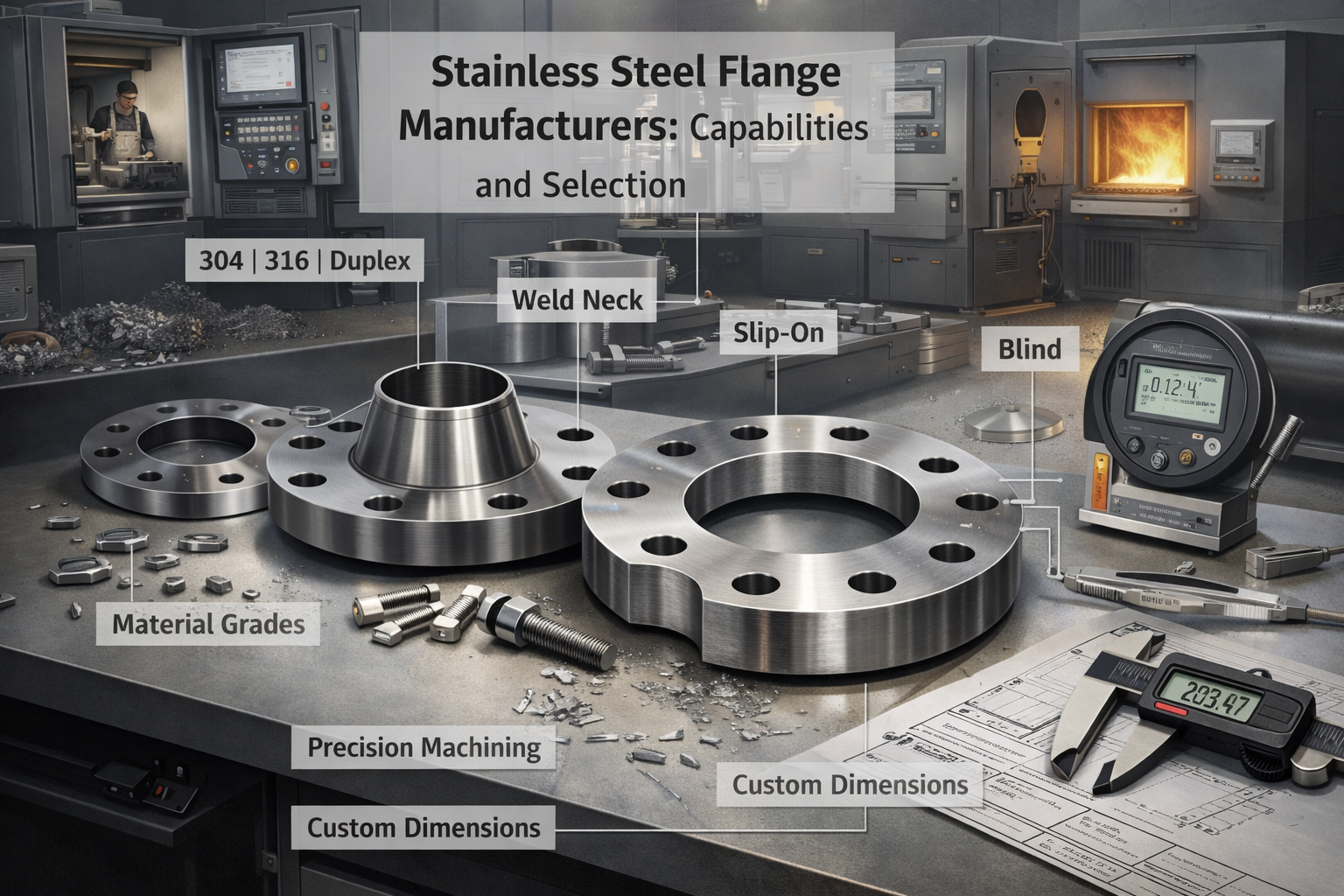
A specialized manufacturer offers more than basic machining. Here are the key areas where their expertise matters.
| Capability | What It Means & Why It’s Important |
| Material Expertise & Sourcing | They can source and work with various grades (304, 316, duplex, etc.) and provide material certifications (MTRs). This ensures corrosion resistance and strength for your specific fluid and environment. |
| Advanced Manufacturing Processes | They use processes like forging (for high-strength parts) and precision CNC machining. Forging aligns the steel’s grain structure, making flanges stronger for high-pressure systems. |
| Range of Flange Types | They produce all standard types (Weld Neck, Slip-On, Blind, etc.) and can handle special or custom designs. This shows depth of experience and tooling. |
| Quality Control & Certification | They perform inspections, non-destructive testing (like ultrasonic tests), and ensure products meet ASME, ASTM, or API standards. This is non-negotiable for safety and leak prevention. |
| Technical & Engineering Support | They help select the right flange type, material, and pressure class for your application, preventing costly errors. |
The Manufacturing Process: From Raw Material to Finished Flange
Understanding how flanges are made highlights why manufacturing quality matters. Here’s a simplified view of the key steps for a forged flange:
Forging vs. Other Methods:
- Forging: The preferred method for critical applications. It creates a denser, stronger metal grain structure, ideal for high pressure and temperature.
- Casting: Molten steel is poured into a mold. It can be cost-effective for complex shapes but may contain internal flaws like pores. Generally not as strong as forging.
- Plate Cutting: Flanges are cut directly from a steel plate. Best for large, low-pressure flanges where the grain structure is less critical.
How to Select the Right Manufacturer: A Decision Guide
Use this flowchart to evaluate and select a manufacturer based on your project’s primary drivers:
Key Questions to Ask a Potential Supplier:
- Can you provide material test reports for the flanges?
- What is your standard quality control and testing process?
- Do you manufacture in-house or outsource? What are your lead times?
- Can you provide references or case studies for similar projects?
Frequently Asked Questions
Q: Why does the manufacturing process (forged vs. cast) matter?
A: It directly affects the flange’s strength and reliability. Forged flanges have a continuous grain flow and fewer internal defects, making them stronger and more ductile. They are the standard for high-stress applications in oil & gas or power plants. Cast flanges can be suitable for less demanding, low-pressure services.
Q: What certifications should I look for?
A: Look for manufacturers whose flanges conform to international standards like ASME B16.5 (dimensional) and ASTM A182 (material specification for forged alloy and stainless steel pipe flanges). Material certifications are essential for traceability.
Q: Are all stainless steel grades the same for flanges?
A: No. Grade 304 is general-purpose. Grade 316 has added molybdenum for better corrosion resistance, especially against chlorides. For highly corrosive or specialized environments, manufacturers offer duplex, super duplex, or nickel alloys.
Q: Can a manufacturer help if I need a non-standard or custom flange?
A: A capable manufacturer with in-house engineering and advanced CNC machining can produce custom bores, unusual bolt patterns, special facings (like RTJ), or flanges from specialty alloys. This is a key differentiator from a simple distributor.
Conclusion
A stainless steel flange is a critical component. Its performance depends on both the material and the skill of the manufacturer who shapes it. Choosing a partner with the right expertise, processes, and quality focus ensures a safe, reliable, and long-lasting connection for your piping system.
Need stainless steel flanges from a manufacturer with proven expertise in forging, precision machining, and quality assurance? Contact Texas Flange to discuss your specific requirements and get a quote for your project: http://texasflange.com/lp12/